
Topics this week include: >> Autoland options >> Goals of the flight >> SOPs and techniques

FLYING LESSONS uses recent mishap reports to consider what might have contributed to accidents, so you can make better decisions if you face similar circumstances. In most cases design characteristics of a specific airplane have little direct bearing on the possible causes of aircraft accidents—but knowing how your airplane’s systems respond can make the difference in your success as the scenario unfolds. So apply these FLYING LESSONS to the specific airplane you fly. Verify all technical information before applying it to your aircraft or operation, with manufacturers’ data and recommendations taking precedence. You are pilot in command and are ultimately responsible for the decisions you make.
FLYING LESSONS is an independent product of MASTERY FLIGHT TRAINING, INC.
Pursue Mastery of Flight®
This week’s LESSONS
As promised, this week we’ll catch up on reader mail. To the Debrief!
Questions? Comments? Supportable opinions? Let us know at [email protected].

Debrief
Readers write about recent LESSONS:
Reader, instructor (including in pressurized and turbine aircraft) and air crash investigator Jeff Edwards writes about last week’s LESSONS from the first documented emergency use of Garmin’s Autoland system by the crew of a Beech King Air:
Excellent comments on the King Air matter. Here are my thoughts based on my training and experience. Cabin depressurization events are emergencies. A majority of depressurization events result in a normal landing.
My research of NASA ASRS reports numbering in the hundreds indicates that if pilots don O2 masks ; or begin an immediate emergency descent; or both don and descend then the outcome will be successful. In this case the crew of two recognized they had a cabin depressurization. It is reported they donned the O2 masks. They then permitted the automation to program and fly a descent to a landing.
It is reported that they did not make any radio calls from the loss of cabin pressurization at altitude to landing. Why they did not make any radio calls to ATC baffles me and IMHO was not wise. At best it was irresponsible and at worst it was negligent. At least let ATC know what is going on. The Garmin system is a great lifesaver and worked well in this case and further proved you don’t need two knuckleheads in the cockpit 😊.
Here is a nine-minute video on Garmin Autoland as installed in the Beech King Air, including system components like autothrottle. Autoland begins at about 3:50 in the video.
I’ve not been able to find the AFM Supplement for Autoland in an admittedly brief online search and romp through the Garmin product support website. I doubt there is anything that locks the crew out of communications radios while Autoland is engaged, but it’s possible that’s the case. Several Garmin professionals read FLYING LESSONS, including the pilot in the video linked above, so perhaps they can provide an answer to my question: Can the pilots still communicate via radio without disengaging Autoland, or does the safety system completely take over the communications system? Thanks, Jeff.
Another instructor in high performance aircraft, reader Brian Sagi, continues:
Excellent topic!
Yes!!!!! In an emergency, use all resources available to you. That means the autopilot, Garmin navigators, ATC, passengers—everything!!!
In training, feel free to overload yourself and simulate a complex failure (we need to fly an airplane in IMC with asymmetrical flap extension, a broken elevator cable, an engine fire, and—yes—the autopilot is unavailable and, shoot, the radios just failed). But in a real emergency, use all available resources.
As pilots, we know that our wings have a critical angle of attack. We strive to fly in a way that gives us plenty of stall margin. Likewise, our brains have a “critical angle of attack.” It is called cognitive overload. When pilots experience cognitive overload, their situational awareness is impaired. They become myopic, focusing on what they perceive as the highest priority while shedding tasks they view as non-essential at that moment. At a minimum, cognitive overload leads to suboptimal performance.Unfortunately, on numerous occasions cognitive overload has also led to fatal accidents. Take, for example, a pilot who experienced a door opening on takeoff and then proceeds to crash the airplane. Their brain most likely focused on the task they viewed as most important—closing the door—while neglecting to maintain control of the aircraft.
So yes, to maintain a margin against cognitive overload, use all resources at your disposal in an emergency. In fact, do the same anytime you start feeling overloaded, even if there is no emergency.
I fly several types of aircraft equipped with the Garmin Emergency Autoland system (also called “HomeSafe”). The AFM for each of those aircraft includes a limitation stating that the system is to be used only in the event of pilot incapacitation and that, if the pilot is no longer incapacitated and is able to fly the airplane, the system must be deactivated.
I have encountered cases where Garmin Emergency Autoland was activated (perhaps inadvertently) and the pilot did not know how to override it. Unfortunately, Garmin and aircraft OEMs have not standardized deactivation procedures across aircraft models, and the actions required to cancel Emergency Autoland vary slightly by airplane type (they commonly involves pressing and holding the autopilot disconnect button or pressing it twice, with alternative deactivation methods also provided). If you are flying an aircraft equipped with Garmin Emergency Autoland / HomeSafe, it is imperative that you know how to deactivate the system!
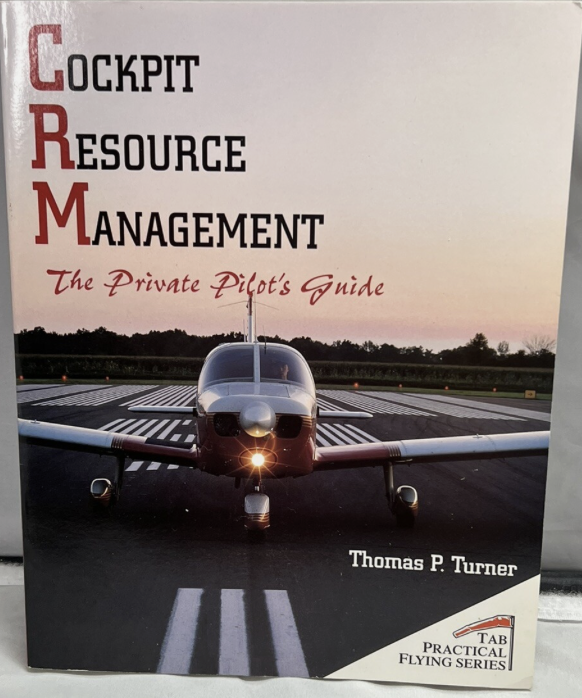
In my (now hopelessly outdated and out of print) book Cockpit Resource Management: The Private Pilot’s Guide one chapter is dedicated to “The Goals of the Flight.” Ultimately the goal of every flight is to land safety. If that landing occurs where and when you initially planned then all the better, but the true goal is to make good decisions that, if necessary, call for doing something other than you hoped and planned to do. Technological advances (including many since I wrote that book in late 1994) give us more tools to meet that goal in normal, abnormal and emergency operations. There is no need to deny yourself the advantages of these tools when you need them—and the greatest advantage is freeing up mental bandwidth to better manage the overall condition.
Clearly something happened to that King Air that led to cabin depressurization and automatic activation of the Autoland system. Could the crew have disengaged the system after donning masks and hand-flown it to a landing? Probably, we don’t yet know for sure. Might there have disorientation, concern about the event that led to depressurization, or a preplanned Standard Operating Procedure that says once the system is activated the crew should keep it engaged until meeting the goal of a safe arrival? That’s all possible too.
If the crew was faced with a situation, disengaged Autoland to manually fly to a landing, and for some reason was unable to maintain control of the aircraft and the King Air crashed, then we’d be having a discussion about letting technology take you somewhere you should not have gone. But while I might have made an explanatory radio call to Air Traffic Control assuming it was possible to do so, I find it hard to criticize a crew that used the technology available to them.
Your final statement:
… it is imperative that you know how to deactivate the system!
applies to all autopilot systems, of course, not just Autoland. Thanks for your insights, Brian.
Jeff Edwards also writes about my December 25 LESSONS prompted by a training aircraft’s engine failure and our ongoing Debrief discussion of multiengine training from last month:
Regarding the engine out landing you described. My research showed that pilots who belong to type club organizations and undertook transition training from qualified organizations like the ABS, COP, LOBO, etc. have better outcomes than pilots flying the same make model aircraft.
It stands to reason that a pilot who has been trained on the specific procedures and nuances of the airplane being flown will have a greater chance of success when faced with an emergency. As I write in the fine-print introduction at the title of each week’s report:
In most cases design characteristics of a specific airplane have little direct bearing on the possible causes of aircraft accidents—but knowing how your airplane’s systems respond can make the difference in your success as the scenario unfolds.
I’m not sure what type-specific training is available for pilots of the Piper Cherokee, the type that instigated our LESSON. That leaves it to the instructor, and the pilot him/herself, to read the Pilot’s Operating Handbook to glean as much design-specific information as possible.
Jeff continues:
Regarding Dave Dewhurst’s comments about twenty different CFIs giving twenty different opinions about X. IMHO that is a major problem in GA. A complete lack of standardization in GA flight training leads to poor results. The Navy implemented NATOPS (Naval Aviation Training and Operating Procedures Standardization in the 1960s which led to a big improvement in naval aviation safety. Other military branches also emphasize standardization as do the airlines. We have a long way to go in GA.
I think I was the one that made the comment about multiple instructors coming up with different ways to do things—that’s my usual quip about Hot Start procedures in aircraft with fuel injected piston engines. There’s room for variations in technique used to accomplish a procedure. For example, in retractable gear airplanes the required procedure is to extend the landing gear before the aircraft makes contact with the runway. One technique is to extend the landing gear to begin descent from pattern height, at the Final Approach Fix of an instrument approach, or when intercepting the glideslope or glidepath when that does not coincide with the FAF, whichever happens first—the sol-called “gear down to go down” technique. Others, however, prefer to extend the gear prior to the FAF or glidepath intercept so if there is a landing gear malfunction it does not coincide with transition to the final phase of the approach. Neither technique is “right” and neither is “wrong,” as long as the procedure is accomplished.
As a former Strategic Air Command officer (i.e., “SAC Weenie”), I wish we could impose a single way of doing things in personally flown airplanes. Some flexibility for different technique is a reality of the needs of different adult learning styles and an environment where there is no “washout” system for pilot candidates as long as they have the money to keep trying.
We do need to hold to standardized accomplishment of procedures. This includes emergency procedures checklists starting with memory items (the bold print) followed by actual use of the printed (or electronic) checklist for the non-memory follow-on and clean-up/securing steps, as well as checklists to confirm accomplishment of tasks in normal operations. The Type Clubs and training organizations’ role is to use their collected experience with the type to derive and teach industry best practices for each phase of flight. Individual instructors can teach to those best practices, or others if they have good, supportable reason to do so, but the instructors’ responsibility is to teach until the Pilot Receiving Instruction (PRI) is consistent with whatever technique that is adopted, so there is no doubt that pilot will perform similarly in their everyday and emergency flying. As the late, great Richard Collins once wrote (paraphrased here, because I can’t find the precise quote):
The problem isn’t that pilots have bad techniques, it’s that they have no standard technique at all.
Thanks again, Jeff.
Reader Mike Dolin continues our Debrief discussion about best practices for airplane fueling, a (beneficial) thread drift from the December 18 LESSONS advocating a post-flight inspection:
I almost responded before to Post-Flight Inspection but Reader Al Chaker has finally tipped the balance. I totally agree with fueling my airplane myself.
And I shouldn’t fuel yours either. I’ve seen some crazy fuel caps on airplanes. Maybe I can’t replace yours correctly.
I connect the ground wire to my wing tiedown (not exhaust pipe). The fuel is in the wing, let’s connect the grounding wire there. But some planes don’t have an obvious wing grounding point like mine. And for some, the fuel isn’t even in the wing.
After each flight I wash the bugs off my plane. One flight, one wash. Crazy OCD? There’s value in it. I get to see the whole machine and see the condition of every part. If or when there’s a problem ANYWHERE it gets immediate attention. Be it fluid leaks, missing hardware or broken parts. There should be no surprises before the next flight.
I go inside the cabin and perform a preflight checklist, setting all items that can be before starting. I’m so suspicious of accident reports where a pilot possibly didn’t set trim or the fuel system correctly resulting in catastrophe. In short, [the pilot] didn’t use their own preflight checklist.
Great techniques, Mike. Thank you.
Reader Robert Lough also writes:
I do make a walk around post-flight, and whether it is effective or just makes me feel better, will open the engine compartment, open the oil filler, on the theory that this will allow hot moisture to leave the engine and not condense into the oil. This also lets me check on the engine compartment. Will then after around ten minutes close the filler cap and engine compartment.
That’s a good technique. In airplanes that permit the cowling to be opened fully be cautious about leaving it open. A breeze or, more likely, an aircraft taxiing past can blast the open cowl door, potentially bending it or damaging its hinges. I too pop the lids on calm days, but unless the aircraft is in a hangar I do not leave the cowlings open if I am going away from the aircraft. I want to be there to close the lid if I see an aircraft taxiing near.
Robert also adds to the multiengine training discussion:
I didn’t want to weigh in on the VMC/Asymmetric stall discussion, but as it made a second appearance I thought I would comment.
[I’m] very fond of the [Piper] Apache, but there have been VMC rolls even in this underpowered twin piston. I think about the only popular type that has not experienced a VMC roll accident is the Piper Seneca, in particular in the Seneca I variant. Some types, the [Diamond] DA42 for example, are developing a Twin Comanche (-like) reputation for regular VMC departure accidents.
In the UK we treat the VYSE blue line as the VSSE [minimum safe speed to simulate engine failure] on the DA42 type, and demonstrate VMC with a safe, but inverted logic. Having demonstrated asymmetric departures into spiral dives at safe speeds, well above VYSE, with an emergency response spiral dive recovery (closing both throttles as the first recovery action), our VMC demonstration in the DA42 is designed to inform principle of flight learning objectives.
The airplane is held wings level, maximum power (also MCP) on the starboard engine, the student will slow to blue line/VSSE, and note that she or he is approaching maximum rudder deflection. They then “raise the dead” [engine] up to around 3 degrees [bank angle] and note that to prevent yaw they have to allow a half ball slip to the live [engine side], in effect reducing rudder application. We then set zero thrust, reducing rudder input further, and get them to trim for asymmetric straight and level. Safety brief is to initiate an emergency recovery, i.e., reduce power on both engines, at the earliest of VSSE, un-commanded yaw towards the dead engine, or first symptoms of the stall.
The Cessna twins are not immune to VMC departures into a flat spin, especially in the versions with main tanks on the tips! The departure is due to a yaw-aggravated stall, and it can be very aggressive if it is due to the tail fin rudder being allowed to go past critical beta [i.e., vertical stabilizer stall]. A student keeping wings level asymmetric with too much aileron, or trying to lift the wing at the stall with aileron, is inducing high beta side slip slipstream on the fin. If on the departure the student then applies rudder to correct for the un-commanded yaw, the increase in camber from rudder input will place the fin past critical, and voilà you have loss of rudder control and a near snap roll departure into an incipient spin.
On the YouTube AvioConsult channel there is the excellent “Airplane Accidents After Engine Failure: Real Value of VMC” which describes conditions for fin rudder stall and the dynamic nature of VMC in an excessive side slip.
Excellent insights, Robert. Thank you. The video you cite is 42 minutes long but worth the time invested. Thank you.
More to say? Let us learn from you, at [email protected].
Share safer skies. Forward FLYING LESSONS to a friend.
Please help cover the ongoing costs of providing FLYING LESSONS through this secure PayPal donations link. Or send a check made out to Mastery Flight Training, Inc. at 247 Tiffany Street, Rose Hill, Kansas USA 67133.
Thank you, generous supporters.
Thank you to our regular monthly financial contributors:
Steven Bernstein, Montclair, NJ. Robert Carhart, Jr., Odentown, MD. Greg Cohen, Gaithersburg, MD. John Collins, Martinsburg, WV. Dan Drew. Rob Finfrock, Rio Rancho, NM. Norman Gallagher. Bill Griffith, Indianapolis, IN. Steven Hefner, Corinth, MS; Ellen Herr, Ft Myers, FL. Erik Hoel, Redlands, CA. Ron Horton. David Karalunas, Anchorage, AK. Steve Kelly, Appleton, WI. Karl Kleiderer. Greg Long, Johnston, IA. Rick Lugash, Los Angeles, CA. Richard McCraw, Hinesburg, VT. David Ovad, Resiertown, MD. Steven Oxholm, Portsmouth, NH. Brian Schiff, Keller, TX. Paul Sergeant, Allen, TX. Paul Uhlig, Wichita, KS. Richard Whitney, Warrenton, VA. Jim Preston, Alexandria, VA. Johannes Ascherl, Munich, Germany. Bruce Dickerson, Asheville, NC. Edmund Braly, Norman, OK. Steven Hefner. Lorne Sheren, New Vernon, NJ. “The Proficient Pilot,” Keller, TX. Kynan Sturgiss, Hereford, TX. Bluegrass Rental Properties, LLC, London, KY. John Foster. Joseph Victor, Bellevue, WA. Chris Palmer, Irvine, CA. Barry Warner, Yakima, WA. Todd LeClair, Cadiz, KY. Jim Hopp, San Carlos, CA. Adrian Chapman, West Chester, PA. Ed Stack, Prospect Heights, IL. Robert Finley, Dubois, Wyoming. Robert Finley, John Kinyon, Lawrence Copp, V. Andrew Smith
NEW Monthly contributor beginning this week: Kevin Echols
Thank you to these 2026 donors:
Robert Sparks, Mark Sletten, Thomas Jaszewski, Douglas Olson, David Field, Michael McRobert
Thanks also to these donors in 2025:
N. Wendell Todd. David Peterson. Jay Apt. Gilbert Buettner. David Larsen, Peter Baron, Glen Yeldezian, Charles Waldrop, Ian O’Connell, Mark Sletten, Lucius Fleuchaus. Thomas Jaszewski. Lauren McGavran. Bruce Jacobsen, Leroy Atkins, Coyle Schwab, Michael Morrow, Lew Gage, Panatech Computer (Henry Fiorentini), Dave Buetow, Ken Vernmar, Dave Wacker, Bill Farrell, David Miller, Daniel Norris, Robert Sparks, Bill Cannon, David Yost, Don Bowles. Ed Shapiro, Mark Kolesar, William Weber, Anonymous Oshkosh donor, Robert Lough, Martin Sacks, Denny Southard, John Owen, Wayne Mudge, Dale Bleakney, Rod Partlo, Kevin O’Halloran, Joseph Montineri, David Kenny, Boyd Spitler, George Stromeyer, Greg Hill, Phil Parham, Arthur Utay, Lawrence Peck, Glenn Beavers, Richard Erler, Lorne Sheren, Tad Santino, Kenneth Bacow, Joseph Stadelmann, Randy Starbuck, Robert Dunlap, Patrice Kaplowitz
Two 2025 donations: John Teipen, Denny Southard, Wayne Colburn, Andy Urban, Timothy Schryer, Stu Spindel, SABRIS Aviation/Dave Dewhirst
Three 2025 donations: John Whitehead
Pursue Mastery of Flight®
Thomas P. Turner, M.S. Aviation Safety
Flight Instructor Hall of Fame Inductee
2021 Jack Eggspuehler Service Award winner
2010 National FAA Safety Team Representative of the Year
2008 FAA Central Region CFI of the Year
FLYING LESSONS is ©2026 Mastery Flight Training, Inc. For more information see www.thomaspturner.com. For reprint permission or other questions contact [email protected].