
Topics this week include: >> A “real” pilot >> Aero-Luddites >> All available resources

FLYING LESSONS for January 8, 2026
FLYING LESSONS uses recent mishap reports to consider what might have contributed to accidents, so you can make better decisions if you face similar circumstances. In most cases design characteristics of a specific airplane have little direct bearing on the possible causes of aircraft accidents—but knowing how your airplane’s systems respond can make the difference in your success as the scenario unfolds. So apply these FLYING LESSONS to the specific airplane you fly. Verify all technical information before applying it to your aircraft or operation, with manufacturers’ data and recommendations taking precedence. You are pilot in command and are ultimately responsible for the decisions you make.
FLYING LESSONS is an independent product of MASTERY FLIGHT TRAINING, INC.
Pursue Mastery of Flight®
This week’s LESSONS
A controversial event received significant publicity—in and out of aviation circles—a few weeks ago. Here’s an excerpt from one account:
A Beechcraft King Air executed a safe landing in Denver under Garmin Autoland control on December 20, reported to be the first use of the system outside of testing and certification—though a charter operator later told a television news station that the crew responded to a loss of cabin pressure by allowing the system to take over….
Fire officials reported nobody received medical treatment on scene or was transported to a hospital following the landing. Garmin issued a brief statement about the event, confirming the Autoland activation and subsequent landing at Rocky Mountain Metropolitan Airport.
Charter company Buffalo River Aviation issued a statement to CBS Colorado on December 22, explaining that the two pilots aboard the King Air reported a loss of pressurization after departure from Aspen, Colorado, donned oxygen masks, and opted to allow the Garmin system to fly the aircraft to a safe landing at an airport selected by the system. It was not clear why the King Air crew opted not to make any radio calls of their own during the descent and landing at the Colorado airport.
The controversy surrounded the crew’s apparent decision to ride the airplane to a landing once Autoland activated, automatically declared an emergency and transmitted updates to Air Traffic Control, and eventually landed and brought the King Air to a stop. A significant amount of discussion centered on allowing one’s self to turn control over to an automated landing system. The usual aero-Luddites decried the very existence of such a technology. “No real pilot needs or would use such a device,” was asserted widely across the internet.
It does seem odd that a professional, two-pilot crew would ride this system to a landing when there was no incapacitation. Shouldn’t they have overridden Autoland and resumed control? At the very least should they have made a radio call explaining what was going on?
One long-time friend asked me about the event shortly after it was first reported. I listed several possibilities that came to mind, including:
- The crew was incapacitated (possible)
- The crew was alert but diminished in some way, and chose to use Autoland (possible)
- Autoland activated and the crew thought, “Cool, let’s see how this works” (not unlikely)
- The crew did not know how to disengage or override Autoland once it had activated (more likely, given my experience with pilots and significant avionics advancements)
- The charter operator’s Operations Specifications (OpSpecs) call for letting Autoland land the airplane once it activates (possible, but it’s likely Federally approved OpSpecs have not yet been amended to include this very new technology)
- With Autoland activated, the crew consciously chose to monitor its operation but let it continue to a landing out of an abundance of caution (also likely)
Subsequent reports suggest that the last possibility may indeed have been what happened. Is there anything wrong with that? Or would a “real pilot” manually fly an emergency descent, even if potentially impacted by a condition that makes it hard for the pilots themselves to detect?
Let’s work backward a step in technology. With the right avionics Garmin sells a product for single-engine airplanes called SmartGlide. When activated (manually) following engine failure, SmartGlide activates to adjust aircraft pitch to attain and maintain Best Glide speed for that aircraft, simultaneously engaging “direct to” and aiming to the nearest airport if one is within glide range. It maintains wings level straight ahead of no airport is within the airplane’s current glide ring. SmartGlide doesn’t land the airplane; in fact it disengages two miles from the target airport or when reaching a certain height above terrain. The pilot must take over for final maneuvering and landing. But the system flies the airplane and aims it somewhere it can land, at least initially. This that cheating?
What about the Cirrus’ CAPS (Cirrus Airframe Parachute System)? CAPS has its own detractors, but it also has an impressive record of saves. Surely no one should criticize a pilot who makes the difficult decision to pull the “red handle,” mostly likely sacrificing the aircraft to save its occupants. Or is CAPS cheating for a “real pilot” too?
Scale down the technology a bit further. Something goes wrong and you need to divert in a hurry. You hit “Direct to” on your GPS, then activate the autopilot to fly there as you divert some of your attention to other preparations for an immediate landing. It that ok? Or would a “real pilot” pull out a paper sectional, a plotter and pencil to draw a line, measure an angle and determine a heading to fly to the airport?
I think back to the early days of commercial aviation, 100 years ago. The prevailing view at the time was that a pilot could not fly in an enclosed cockpit, unable to feel the wind on your cheek or hear the wind in the wires. The first generation of passenger airliners put customers in the relative comfort of an enclosed cabin but left the pilot exposed to the elements, to be a “real pilot.”
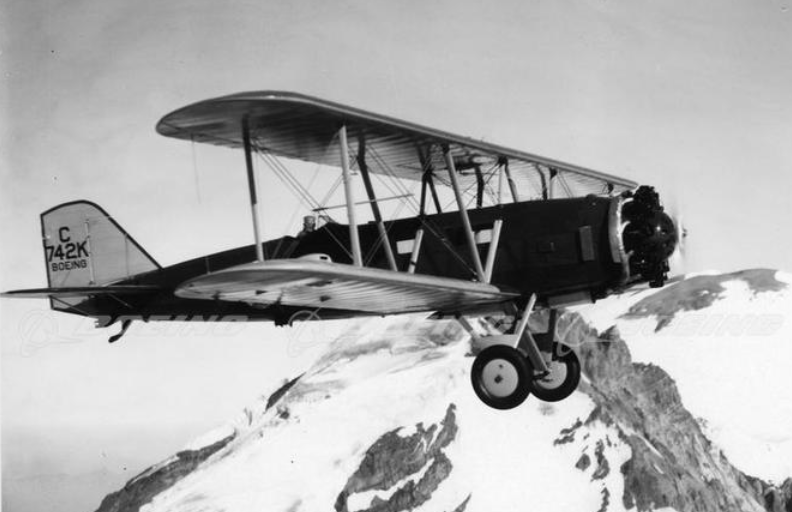
Boeing’s Model 40B represents an era when passengers flew in a cramped cabin between the wings, but the pilot remained in an open cockpit
Obviously that philosophy quickly disappeared. The new technologies of enclosed cockpits and, soon afterward, flight instruments took over until they, too, became archaic.
Of course I’m using hyperbole to describe what “real pilots” should do in an emergency. But is there a limit to what technology we should use in the event of an emergency? Or should we use all available resources to get the airplane safely on the ground?
Don’t be too quick to criticize the pilot who uses what’s available in the aircraft to improve the chances of survival. I’m adamant that pilots must practice and maintain the ability to fly smoothly and accurately by hand. But I’m equally insistent that pilots must master all equipment on board the aircraft, and use it to their advantage if the need arises.
Questions? Comments? Supportable opinions? Let us know at [email protected].
Debrief
Readers write about recent LESSONS:
I’ll get into my large email folder of reader Debriefs next week.
More to say? Let us learn from you, at [email protected]
See https://nafimentor.org/
Share safer skies. Forward FLYING LESSONS to a friend.
Please help cover the ongoing costs of providing FLYING LESSONS through this secure PayPal donations link. Or send a check made out to Mastery Flight Training, Inc. at 247 Tiffany Street, Rose Hill, Kansas USA 67133. Thank you, generous supporters.
“Hi, Tom. Thank you for another year of outstanding continuing aviation education. Nothing comes close to your weekly FLYING LESSONS to keep me thinking and excited to learn about my airplane and my flying. As great teachers do, you have a way of finding the right challenges to keep pushing your extended group of students (all of us Thursday morning readers) to expand our knowledge, skills, and how we think about flying. My stack of 3X5 index cards on my desk with bold print emergency procedures can attest to that!” – Andy Urban
Thank you to our regular monthly financial contributors:
Steven Bernstein, Montclair, NJ. Robert Carhart, Jr., Odentown, MD. Greg Cohen, Gaithersburg, MD. John Collins, Martinsburg, WV. Dan Drew. Rob Finfrock, Rio Rancho, NM. Norman Gallagher. Bill Griffith, Indianapolis, IN. Steven Hefner, Corinth, MS; Ellen Herr, Ft Myers, FL. Erik Hoel, Redlands, CA. Ron Horton. David Karalunas, Anchorage, AK. Steve Kelly, Appleton, WI. Karl Kleiderer. Greg Long, Johnston, IA. Rick Lugash, Los Angeles, CA. Richard McCraw, Hinesburg, VT. David Ovad, Resiertown, MD. Steven Oxholm, Portsmouth, NH. Brian Schiff, Keller, TX. Paul Sergeant, Allen, TX. Paul Uhlig, Wichita, KS. Richard Whitney, Warrenton, VA. Jim Preston, Alexandria, VA. Johannes Ascherl, Munich, Germany. Bruce Dickerson, Asheville, NC. Edmund Braly, Norman, OK. Steven Hefner. Lorne Sheren, New Vernon, NJ. “The Proficient Pilot,” Keller, TX. Kynan Sturgiss, Hereford, TX. Bluegrass Rental Properties, LLC, London, KY. John Foster. Joseph Victor, Bellevue, WA. Chris Palmer, Irvine, CA. Barry Warner, Yakima, WA. Todd LeClair, Cadiz, KY. Jim Hopp, San Carlos, CA. Adrian Chapman, West Chester, PA. Ed Stack, Prospect Heights, IL. Robert Finley, Dubois, Wyoming. Robert Finley, John Kinyon, Lawrence Copp, V. Andrew Smith
Thanks also to these donors in 2025:
N. Wendell Todd. David Peterson. Jay Apt. SABRIS Aviation/Dave Dewhirst. Gilbert Buettner. David Larsen, Peter Baron, Glen Yeldezian, Charles Waldrop, Ian O’Connell, Mark Sletten, Lucius Fleuchaus. Thomas Jaszewski. Lauren McGavran. Bruce Jacobsen, Leroy Atkins, Coyle Schwab, Michael Morrow, Lew Gage, Panatech Computer (Henry Fiorentini), Dave Buetow, Ken Vernmar, Dave Wacker, Bill Farrell, David Miller, Daniel Norris, Robert Sparks, Bill Cannon, David Yost, Don Bowles. Ed Shapiro, Mark Kolesar, William Weber, Anonymous Oshkosh donor, Robert Lough, Martin Sacks, Denny Southard, John Owen, Wayne Mudge, Dale Bleakney, Rod Partlo, Kevin O’Halloran, Joseph Montineri, David Kenny, Boyd Spitler, George Stromeyer, Greg Hill, Phil Parham, Arthur Utay, Lawrence Peck, Glenn Beavers, Richard Erler, Lorne Sheren, Tad Santino, Kenneth Bacow, Joseph Stadelmann, Randy Starbuck
NEW MONTHLY CONTRIBUTOR THIS WEEK: V. Andrew Smith
NEW THIS WEEK: Robert Dunlap, Patrice Kaplowitz
Two 2025 donations: John Teipen, Denny Southard, Wayne Colburn, Andy Urban, Timothy Schryer, Stu Spindel, SABRIS Aviation/Dave Dewhirst
I apologize to my donors for missing publication last week because of a family emergency.
Pursue Mastery of Flight®
Thomas P. Turner, M.S. Aviation Safety
Flight Instructor Hall of Fame Inductee
2021 Jack Eggspuehler Service Award winner
2010 National FAA Safety Team Representative of the Year
2008 FAA Central Region CFI of the Year
FLYING LESSONS is ©2026 Mastery Flight Training, Inc. For more information see www.thomaspturner.com. For reprint permission or other questions contact [email protected].